My Approach to Xanax, Ativan, Ambien, and Similar Medications
Over the years, I have seen controlled substances used far too often as a solution for distress that required meaningful life changes rather than sedation.
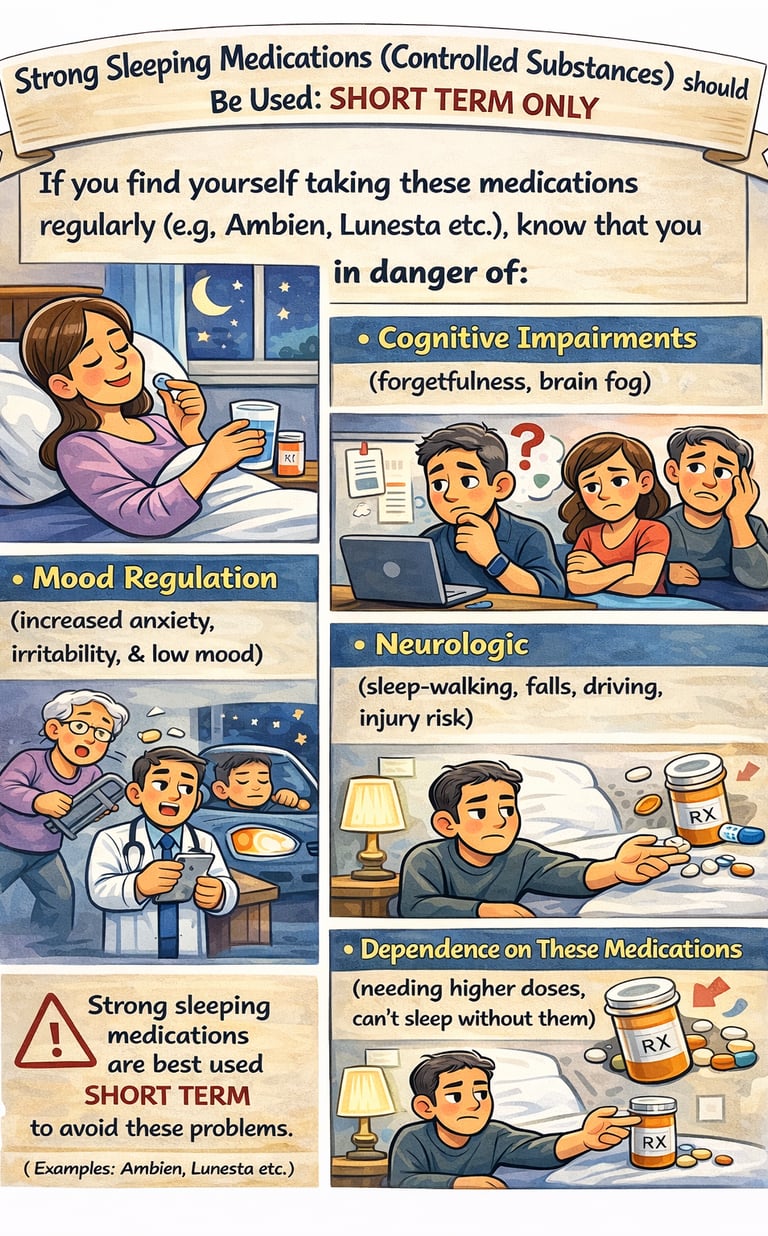
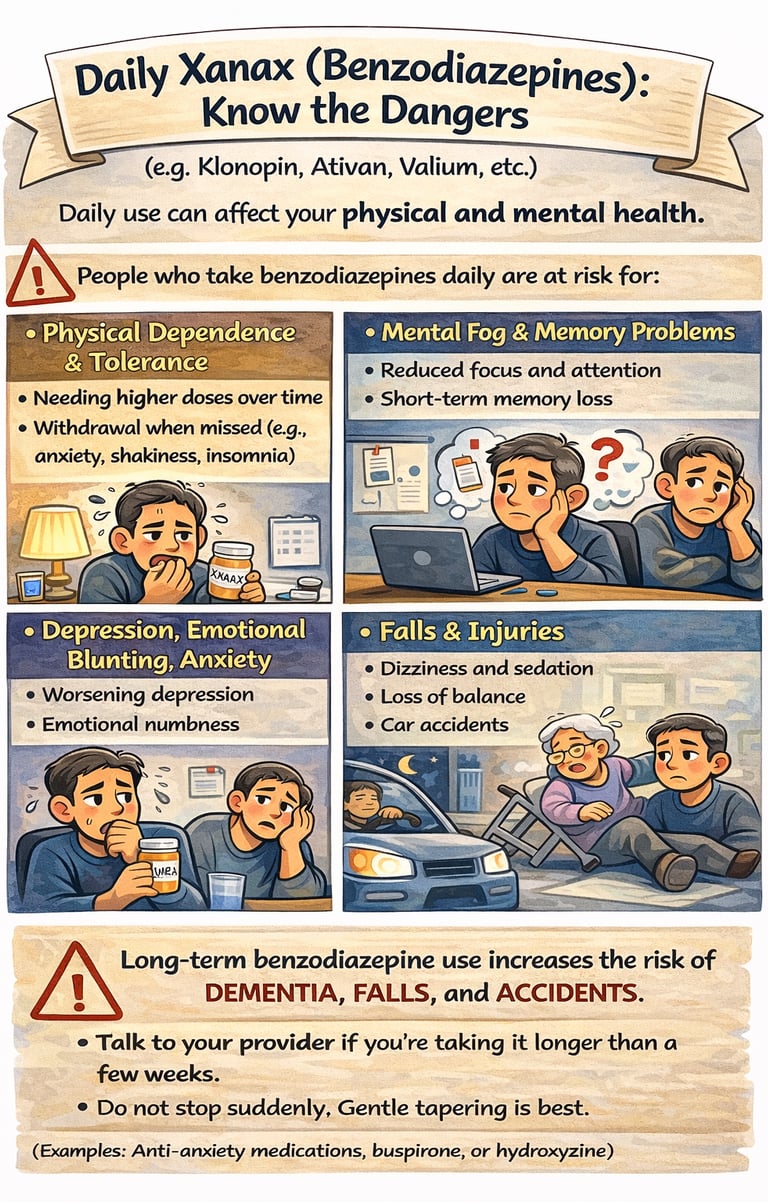
Medications such as Xanax, Ativan, Klonopin, Ambien, Lunesta, and similar agents can temporarily reduce symptoms, but they also carry significant risks — including dependence, tolerance, cognitive effects, emotional blunting, and addiction. I have witnessed how lives can become narrowed around these medications: the fear of running out, escalating doses, urgent demands, and a growing sense that one cannot function without them. These are not signs of healing; they are signs of harm.
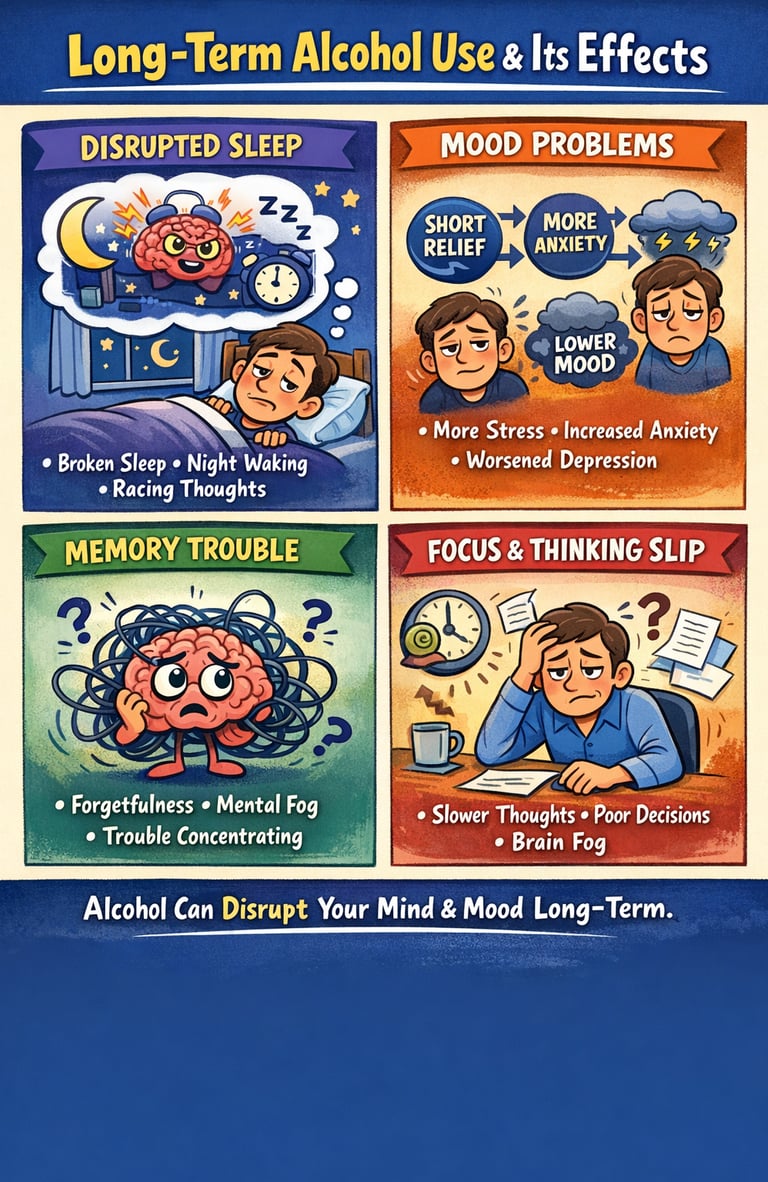
In many cases, anxiety and insomnia are signals — not diseases in themselves. They may reflect chronic stress, unworkable job situations, unhealthy relationships, difficulty tolerating uncertainty, unresolved trauma, or reliance on substances such as alcohol. When these underlying factors are not addressed, controlled medications can unintentionally reinforce avoidance rather than resilience.
For this reason, my practice takes a conservative, safety-focused approach to controlled substances. I prioritize treatments that support long-term stability, insight, and functional improvement. When medications are considered, the risks and benefits are discussed carefully, and safer alternatives are explored whenever possible.
My goal is not simply to reduce symptoms, but to help you build a life that does not require constant chemical relief in order to be tolerable.
Medication Education Series: Sleep Aids and Better Sleep
By Zlatoslava Karga, PMHNP-BC, DNP
Many patients tell me, “I can’t sleep. Can you prescribe something?”
Sometimes a sleep aid is helpful. However, before we reach for a prescription, let’s first make sure we are giving our brain and body a chance to sleep naturally.
Sleep Starts Before Bedtime
One of the most important things to understand is that sleep is not a switch. Sleep is a process.
Our nervous system needs time to slow down and prepare for rest.
Ask yourself:
Is my sleeping environment ready for sleep?
Do I go to bed around the same time each night?
Am I still stimulating my brain right up until bedtime?
Am I expecting a sleeping pill to overcome habits that keep me awake?
These questions matter because even the best sleep medication cannot fully overcome poor sleep habits.
Start Winding Down Around Sunset
Think about how nature works. As the sun goes down, our bodies are designed to prepare for rest.
Around 8:00 PM, try:
Dimming lights throughout your home
Lowering noise levels
Turning off bright screens when possible
Avoiding stressful conversations or work
Many of us spend the day busy and distracted. Then, when everything becomes quiet at night, our minds suddenly become very active.
We replay conversations.
We think about tomorrow.
We worry.
Unfortunately, anxious minds do not sleep well.
Learning how to slow down your thoughts is one of the most important sleep skills you can develop.
Create a Nighttime Routine
Your body benefits from knowing that bedtime is approaching.
One of my favorite bedtime habits is gentle stretching.
Why?
Because many of us spend hours sitting, working, driving, or looking at screens. Tight muscles can contribute to discomfort, aches, and difficulty sleeping.
Try:
Gentle stretching
Light yoga
Relaxation exercises
Mindfulness meditation
There are many free “Yoga for Insomnia” videos available online. Some are only five minutes long.
You do not need perfection. You simply need consistency.
Be Careful with Late-Night Exercise
Exercise is healthy, but intense workouts late at night can sometimes interfere with sleep.
Some people notice:
Difficulty falling asleep
Feeling wired after exercise
Increased nighttime anxiety
Pay attention to how your body responds and adjust accordingly.
Make Your Bedroom a Sleep Space
Your bedroom should tell your brain one thing:
“It’s time to sleep.”
Try to avoid:
Television in the bedroom
Bright lights
Work activities
Excessive screen time in bed
Some people benefit from white noise or calming background sounds.
The goal is to create an environment that supports rest.
Avoid Nighttime Snacking
If you regularly wake up and eat during the night, consider working on this habit.
Our digestive system was not designed to process food continuously around the clock.
Nighttime eating can contribute to:
Poor sleep quality
Weight gain
Digestive problems
Long-term health concerns
If this is a habit for you, try to gradually retrain your body toward eating during daytime hours.
Consider Over-the-Counter Options First
Before starting a prescription sleep medication, many people can benefit from trying:
Magnesium
Valerian root
Herbal sleep blends
Always discuss supplements with your healthcare provider, especially if you take other medications.
Remember: anything prescribed for sleep is typically stronger than most over-the-counter options.
If You Take a Prescription Sleep Aid
A sleeping pill is not magic.
It works best when you work with it.
Some important rules:
1. Take it consistently
Take your medication as directed, usually 30–60 minutes before bedtime depending on the medication.
2. Complete your bedtime routine first
Brush your teeth.
Wash your face.
Finish your stretching.
Turn down the lights.
Be ready for bed before taking your medication.
3. Do not fight the drowsiness
This is one of the biggest mistakes people make.
When you start feeling sleepy, go to bed.
Do not decide to:
Watch one more episode
Check social media
Read emails
Start another task
That sleepy feeling is your window of opportunity.
If you fight it, you may miss it completely.
Then the medication may seem like it “didn’t work,” when in reality the sleep window passed.
Final Thoughts
Good sleep is fragile.
It is not something we force. It is something we prepare for.
Before asking whether you need a stronger sleep medication, ask whether your brain, body, and environment are truly prepared for sleep.
Often, improving sleep habits can make a tremendous difference.
Sleep well.